Title
Epi-metabolic regulation of early mammalian development
Date & Place
About the event
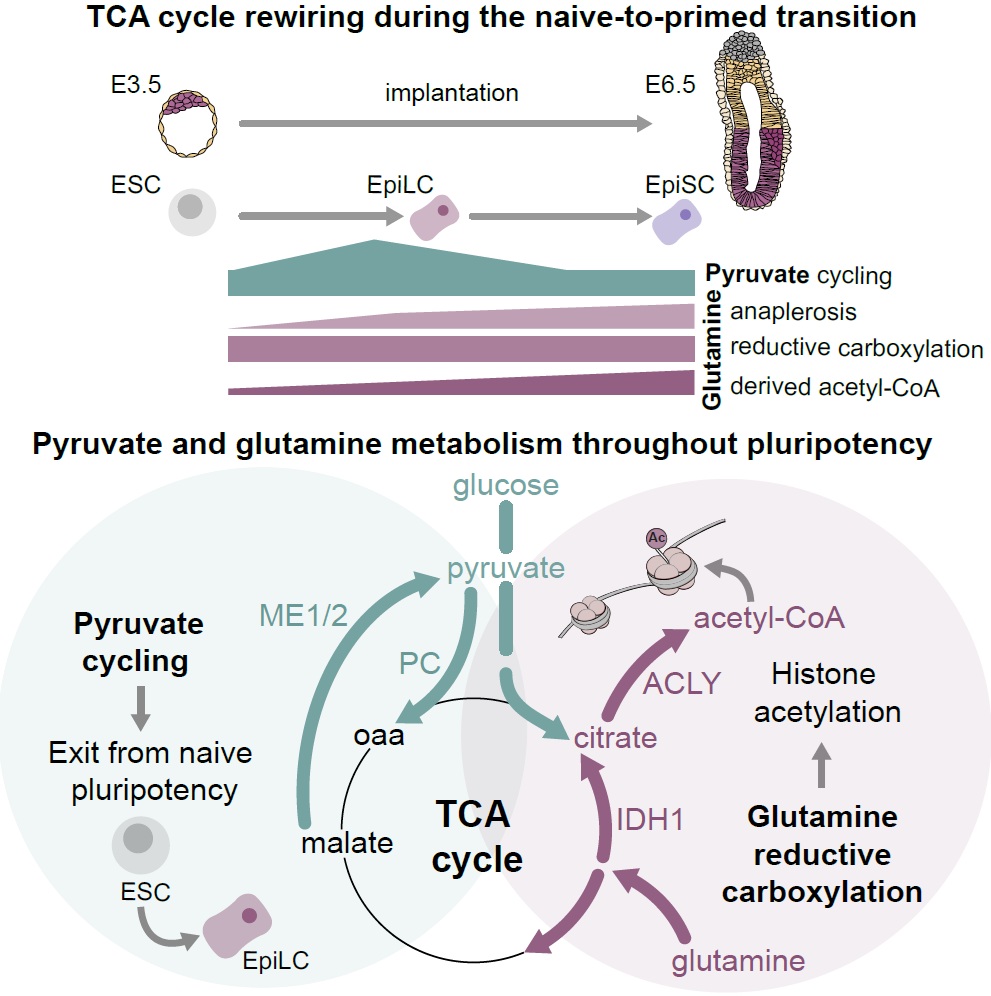
Development is driven by a complex sequence of transcriptional, epigenetic, and metabolic changes. However, these do not operate in isolation, as they are functionally coupled to one another. How these multilayered regulatory networks coordinate precise cell-state transitions remains incompletely understood. A particularly critical stage is the first lineage specification, when the trophectoderm emerges to support successful implantation, as this transition coincides with extensive heterochromatin reorganization alongside dramatic metabolic rewiring.
Here, we combine functional assays with single-cell chromatin profiling approaches and spatially resolved metabolomic analyses to investigate how these processes are coordinated. Our findings suggest that dynamic rewiring of core metabolic pathways directly fuels chromatin modifiers. In parallel, repressive chromatin modifiers establish appropriate transcriptional dosage and maintain transposable elements partially silenced while simultaneously allowing their function as lineage-specific regulatory elements.
Overall, our work highlights a framework in which metabolic state and chromatin modifiers are functionally coupled, providing a basis for robust cell-state changes during early development.
Speaker

Dr Jan Zylicz
This event is a part of RACE Project: RNA and Cell Biology – from Fundamental Research to Therapies and is funded by the European Union. Views and opinions expressed are however those of the author(s) only and do not necessarily reflect those of the European Union or the European Research Executive Agency. Neither the European Union nor the granting authority can be held responsible for them.