Title
Beyond expression: unravelling the complexities of the subcellular biology
Date & Place
About the event
Living systems are governed by regulatory networks that go well beyond simple shifts in protein levels. These networks span several layers of multi-omic control—non-coding RNA regulation, post-transcriptional and post-translational modification, and dynamic subcellular positioning—much of which hinges on interactions between proteins and RNA.
Adding another layer of complexity, many proteins perform unrelated „moonlighting” roles, and where a protein is localised within the cell often determines which function it carries out¹. These secondary roles are strongly influenced by a protein’s interaction partners and its modification state.
I will discuss the power of examining proteome-wide responses to cellular perturbation through spatial redistribution rather than abundance changes alone—relying solely on abundance risks missing important cellular responses². I’ll describe methods for tracking protein localization as it relates to isoform identity and post-translational modification state³,⁴.
I will describe RNA-protein interactions change dynamically during major cellular transitions⁵, and present a new method for mapping protein spatial distribution and RNA transcript localization simultaneously across the whole cell⁶. Applying this approach, I will demonstrate that RNA and protein translocate together during activation of the unfolded protein response (UPR), shedding new light on how RNA is trafficked to stress granules during cellular stress.
Finally, I will discuss uncovering moonlighting roles from metabolic enzymes using global RNA binding proteome approaches and the effect of drug bioaccumulation on their function7.
References:
- Sigaeva A, Hutchings C, Cesnik A, Lilley KS, Lundberg E. Subcellular localization as a driver of protein function. Nat Rev Mol Cell Biol. (2026) 27(7):493-510. doi: 10.1038/s41580-026-00947-3
- Christopher, J. A. et al Global proteomics indicates subcellular-specific anti-ferroptotic responses to ionizing radiation Mol. Cell Proteomics (2025) doi: 10.1016/j.mcpro.2024.100888.
- McCaskie K, et al. Localization of Organelle Proteins Using Data-Independent Acquisition (DIA-LOP). Mol Cell Proteomics. (2025) doi: 10.1016/j.mcpro.2025.101047
- Crook, O.M. et al Robust analysis of comparative subcellular omics with complex designs bioRxiv doi: https://doi.org/10.64898/2026.07.07.736960
- Queiroz, R. M. L et al Comprehensive identification of RNA-protein interactions in any organism using orthogonal organic phase separation (OOPS). Nature Biotechnology, (2019).doi:10.1038/s41587-018-0001-2
- Villanueva, E et al. System-wide analysis of RNA and protein subcellular localization dynamics Nature Methods (2024). doi:10.1038/s41592-023-02101-9
- Xiaoteng Jiang et al Network-scale disruption of RNA-protein interactions by a bioaccumulating small-molecule drug preprint (2026) ; doi: https://doi.org/10.64898/2026.07.23.740326
Speaker

Prof. Kathryn Lilley
Her contributions to the field have been recognized through prestigious awards, including the Juan Pablo Albar Proteome Pioneer Award from the European Proteomics Association in 2017 and the HUPO Distinguished Achievement in Proteomics Award in 2018. She was elected as a member of EMBO in July 2020 and to Academia Europaea in May 2023.
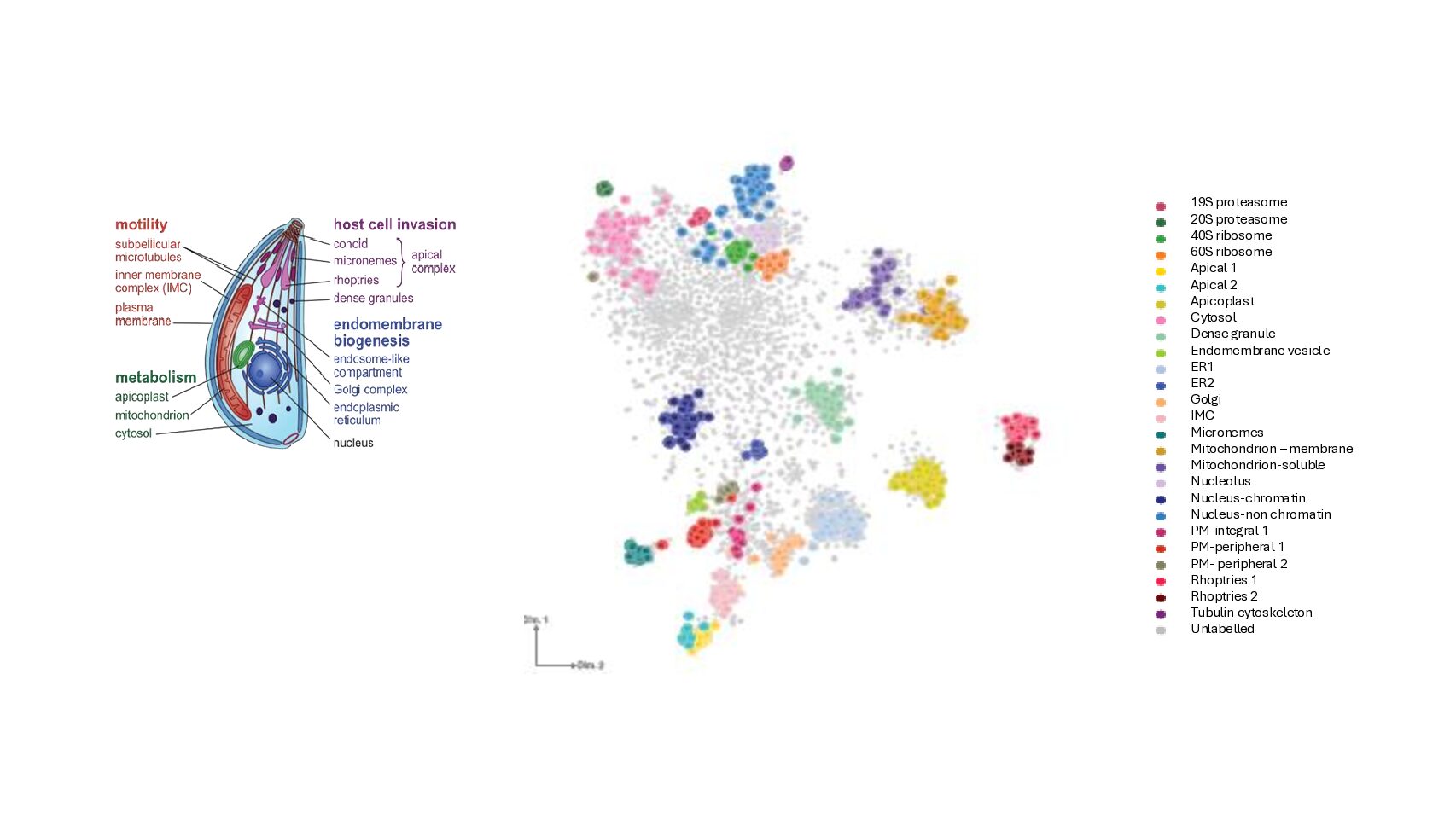
Kathryn directs a research programme focused on developing and applying cutting-edge technologies to map RNA and protein subcellular localization across entire cells. Her research examines how post-transcriptional and post-translational processing affect cellular location, as well as the extent of relocalization that occurs in response to cellular stress and disease. She is also interested in understanding the fundamental rules governing protein abundance and stability.
Her dynamic research group develops specialized data analysis pipelines for spatial proteomics, supported by fully maintained open-access software. Her group applies these innovative methods across diverse biological systems, from vaccine safety studies to investigating protein stability in extremophiles.
From 2027, she will be the joint Head of Department of Biochemistry, University of Cambridge
This event is a part of RACE Project: RNA and Cell Biology – from Fundamental Research to Therapies and is funded by the European Union. Views and opinions expressed are however those of the author(s) only and do not necessarily reflect those of the European Union or the European Research Executive Agency. Neither the European Union nor the granting authority can be held responsible for them.